Home Battery Storage Cost in Dundee
Quick answer
A home battery in Dundee is priced after a survey of your home, because battery capacity, your consumer unit, cable runs and any existing solar all change the figure. You then receive a written, itemised, no-obligation quote. Solar panels and home batteries currently carry 0% VAT until March 2027, and finance is available, subject to status.
Key facts
- The price is confirmed after a survey — no single figure on a website
- Battery capacity is the biggest cost driver
- 0% VAT on batteries and solar until March 2027 under HMRC rules
- Interest-free credit up to £30,000, subject to status
- The written quotation itemises every cost line
- We install through MCS-certified partners
Last updated: 28 October 2026
Last updated: 28 October 2026
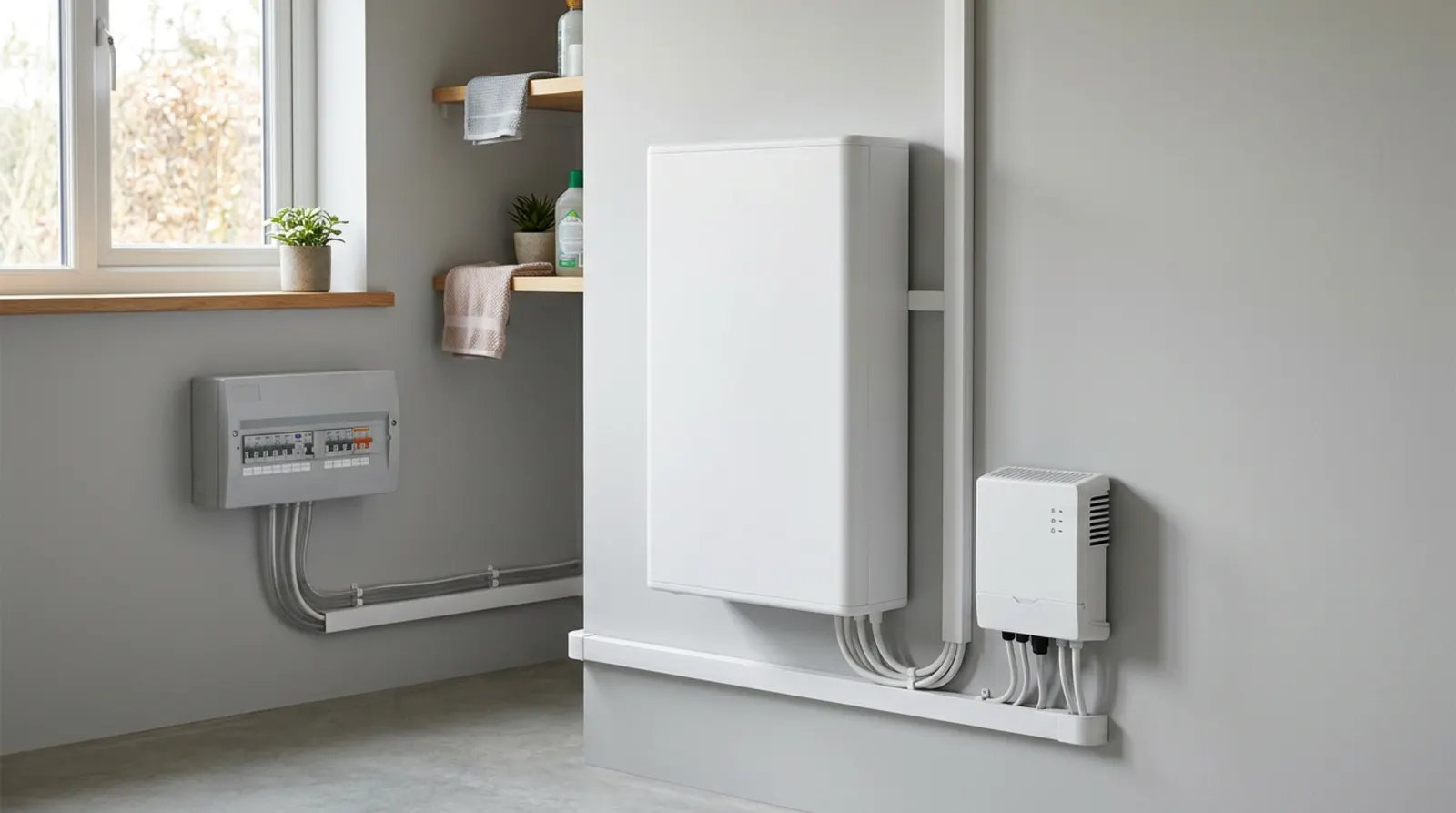
What does a home battery cost in Dundee?
A home battery in Dundee is priced after a survey of your home. The figure depends on battery capacity, your existing electrical setup, and whether you already have solar panels, so we do not publish a single price.
We give you a written quotation after a survey, never a single price on a website. The surveyor checks your meter position, fuse board, available space, and your household electricity usage before specifying a battery capacity that matches your needs.
A smaller household with modest daytime usage will need less capacity than a family running heat pumps and electric vehicles. That is why a fixed price on a website would be misleading — the right battery for your home depends on your actual usage patterns.
The quotation itemises every cost: the battery, the inverter, installation labour, electrical connection, certification, and any adjustments needed to your consumer unit. There are no hidden charges added later.
What factors change the price?
The three main cost drivers are battery capacity (measured in kWh), whether you already have solar panels, and the complexity of your electrical installation.
Battery capacity is the biggest factor. A 5 kWh battery costs less than a 15 kWh battery. The right size depends on how much electricity you use during the day and how much of it you want to shift to the overnight rate. The surveyor calculates this from your actual usage, not from a guess.
If you already have solar panels, the battery can be retrofitted to your existing inverter or may need a hybrid inverter, depending on your current setup. If you do not have solar, the battery works standalone, charging from the grid overnight.
Installation complexity matters too. If your consumer unit needs upgrading, or the battery needs to be sited some distance from your meter, the labour cost will be higher. The survey identifies these requirements before you commit.
Can I spread the cost?
Interest-free credit of up to £30,000 is available, subject to status and affordability. Terms and conditions apply.
The quotation includes the full cost of the installation. If you choose to spread the cost, the credit terms are set out separately so you can compare them with paying in full.
You are never obligated to use our finance partners. You can pay in full, arrange your own finance, or use a provider of your choice. The installation price is the same either way.
Is VAT charged on a home battery?
Solar panels and home batteries currently qualify for 0% VAT until March 2027 when installed in a home as energy-saving materials. Your written quotation shows the VAT treatment line by line.
The relief applies to the battery whether it is installed on its own, added to solar panels you already have, or fitted alongside new panels. It is set by HMRC, not by us, and the quotation is prepared under the rules in force on the date it is issued.
Other work, such as a separate electrical job that is not part of the battery installation, may be treated differently. If anything on the quotation carries VAT, it is shown clearly so you can compare like with like.
How does a Dundee home affect the installation?
The type of property changes where the battery can go and how much cabling is needed, which is why the price is confirmed after the survey rather than before it.
In a tenement flat in the West End or Lochee, the meter is often in a shared close or a cupboard by the front door, and the battery has to sit somewhere safe, ventilated and accessible inside the flat. Shared areas may need the agreement of the other owners.
Victorian and Edwardian villas in Broughty Ferry and along the Perth Road usually have more space, often a cellar, utility room or garage, but thick sandstone walls can mean longer cable runs between the meter, the consumer unit and the battery.
Ex-council semis and terraced houses across the city, from Fintry to Kirkton, are usually the most straightforward: the meter is typically on an outside wall or in the hall, and a garage, utility space or external wall nearby often gives a good position for the battery.
What is included in the price?
The written quotation includes the battery, inverter, monitoring system, installation labour, electrical connection, certification, and insurance-backed guarantee documentation.
You also get help identifying a suitable time-of-use tariff for your area, and ongoing monitoring support after installation. Everything is itemised so you can see exactly what each component costs.
We install through MCS-certified partners. The equipment is MCS-listed, and warranty terms are confirmed in writing on your quotation.
If you want to understand how interest-free credit works for home energy improvements — including monthly payment plans subject to status — our colleagues at Boiler Finance Scotland cover that in detail. Part of the Scottish Energy Efficiency network.
Frequently asked questions
Do you install home batteries in Dundee?
Yes. We install home battery storage across Dundee and the wider Tayside area through our MCS-certified partners. Every installation starts with a survey at your home, where the meter, consumer unit and available space are checked, followed by a written, no-obligation quote that sets out the battery, the work involved and the warranty terms.
Can I add a battery to my existing solar panels?
Yes. Most existing solar PV systems can take a battery. With a hybrid inverter the battery connects directly; with a standard string inverter, an AC-coupled battery with its own inverter is added. Your panels keep generating as before, and the surveyor confirms which setup suits your system and what the network operator needs to be told.
Is finance available?
Interest-free credit up to £30,000, subject to status. The terms are shown on your written quotation alongside the full installation price. You are never obliged to use credit: you can pay in full or arrange your own finance, and the installation price stays the same whichever you choose.
How do I get a quote?
Call 0141 230 0198 or send the quote form on this page. We call you back within one working day to book a survey at your home. After the survey you receive a written, no-obligation quote with the battery size, every cost line and the warranty terms, so you can decide in your own time.
How much does a home battery cost in Dundee?
The price is confirmed after a survey at your home, because battery capacity, your consumer unit, the cable run from the meter and any existing solar panels all change the figure. You then receive a written, itemised quotation with no obligation, so you can compare it properly before deciding anything.
Are there hidden costs?
No. The written quotation itemises every cost: the battery, inverter, installation, certification, and any electrical upgrades needed. If the survey identifies work that changes the price, you see that before you sign. The quotation is fixed in writing, so the figure you sign is the figure you pay.
Can I get finance?
Interest-free credit up to £30,000, subject to status. The credit terms are confirmed on your written quotation, and you are never obliged to use credit: you can pay in full or arrange your own finance. Ask the surveyor if you would like both options shown side by side on the quotation.
Does a bigger battery cost more?
Yes. Battery capacity is the biggest cost driver. A 5 kWh battery costs less than a 15 kWh battery. The right size depends on your daytime usage and how much you want to shift to the overnight rate. The surveyor sizes the battery to your actual usage.
Is VAT charged on a home battery?
Solar panels and home batteries installed in a home currently qualify for 0% VAT until March 2027 under HMRC rules for energy-saving materials. Your written quotation shows the VAT treatment line by line, so you can see exactly how each part of the installation has been charged.
Reviewed by the Scottish Energy Efficiency team. Last updated: 28 October 2026.
Ready to get your written quotation?
Survey first, written quotation second. No deposit, no obligation. We call you back within one working day.
- Home survey before any price
- We install through MCS-certified partners
- Interest-free credit up to £30,000, subject to status.